The idea came to me on a Tuesday in October. I was sitting in traffic on I-95, watching brake lights stretch to the horizon like a bleeding wound, and I thought: what if I just... kept driving? Not to work. Not to the grocery store. Not to my sister's place in Maryland. Just kept going until I hit the ocean on the other side.
I mentioned it to Sarah that night over dinner. She was eating leftover stir-fry from a container (yes, we're still meal prepping, and no, I'm still not tired of it). I said, "I want to drive across the country."
She looked at me like I'd suggested we adopt a raccoon. "By yourself?"
"Yeah."
"For how long?"
"Nine days, maybe ten."
She took a bite of broccoli. Chewed it slowly. Then said, "You should do it."
I expected an argument. I expected "that's irresponsible" or "we have a dog" or "what about work." Instead, she said, "You've been talking about this for years. Just go." And then she went back to her stir-fry like we'd just discussed what to have for dinner instead of a 3,000-mile solo road trip.
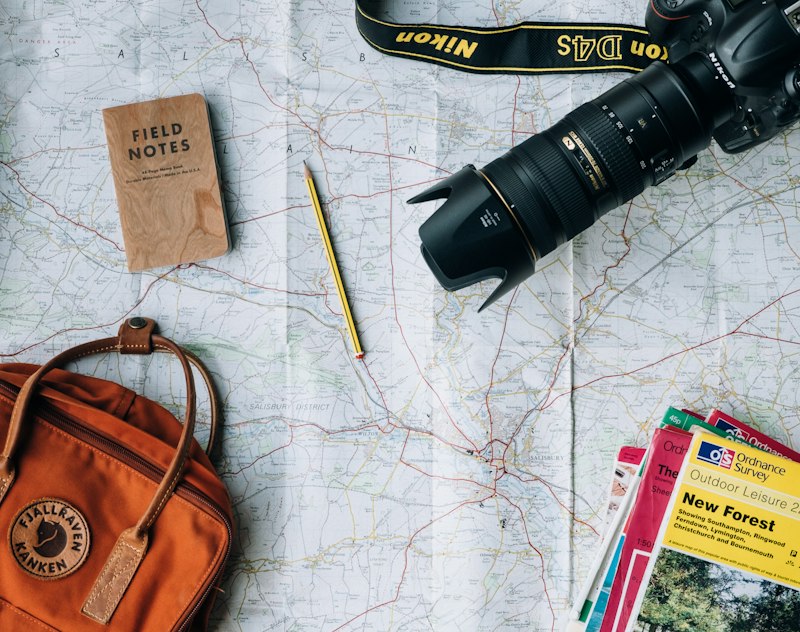
Three weeks later, I was loading up my Honda CR-V with a duffel bag, a cooler, a road atlas I bought at a gas station because my phone charger stopped working 40 minutes into the trip, and a vague sense that I was making a terrible decision. The plan was simple: drive from Richmond, Virginia to Santa Monica, California, take the scenic route, and figure out the rest as I went.
The Route
I chose a southern route because I was doing this in late October and I didn't want to deal with mountain snow. Also, I hate being cold, and the idea of driving through Colorado in October made me want to curl up under a blanket.
Here's the path I took, roughly:
Richmond, Virginia to Nashville, Tennessee — about 600 miles, 9 hours. Nashville to Memphis — 200 miles, 3 hours. Memphis to Oklahoma City — 450 miles, 6.5 hours. Oklahoma City to Amarillo, Texas — 260 miles, 4 hours. Amarillo to Albuquerque, New Mexico — 290 miles, 4 hours. Albuquerque to Flagstaff, Arizona — 320 miles, 5 hours. Flagstaff to Las Vegas — 250 miles, 4 hours. Las Vegas to Santa Monica — 270 miles, 4 hours.
I drove 3 to 5 hours per day, which meant I had time to actually stop and see things. Some days I drove less. One day I drove 8 hours because I wanted to get home faster and I'd made the mistake of listening to a true crime podcast that made every rest stop feel like a potential crime scene. The key for me was not trying to do it all in one push. I gave myself 9 days, which felt right. Not too long, not too short. Just enough time to get somewhere and not enough time to get bored.
The Flat Tire in New Mexico
This happened on day four. I was driving through a stretch of New Mexico between Gallup and Albuquerque — flat, desert, nothing but scrub brush and the occasional abandoned car on the side of the road — when I heard a sound. A rhythmic flapping. I looked in the rearview mirror and saw my rear passenger tire flopping around like a deflated balloon.
I pulled over. Got out. The tire was shredded. Not flat — shredded. Like something had attacked it. I have no idea what. A rock, maybe. A piece of metal on the road. A desert creature with a vendetta. Whatever it was, that tire was dead.
No problem. I had a spare. I opened the trunk, pulled out the spare, and... it was also flat. Not shredded, just flat. Completely, totally flat. Like it had been flat since I bought the car three years ago and I'd never once checked it. Because of course I hadn't. Who checks their spare tire? (Answer: responsible people. I am not always a responsible person.)
I stood on the side of I-40 in New Mexico with two flat tires and no phone signal. The sun was going down. The desert was getting cold. I could see a truck stop about a mile ahead, so I grabbed my wallet, locked the car, and walked. In sandals. Because I'd been wearing sandals for comfort while driving, not anticipating that I'd end up hiking along a New Mexico highway at dusk.
The truck stop was called "Lupe's Travel Center." It smelled like diesel and fryer oil. There was a guy at the counter named Victor who sold me a can of Fix-a-Flat for $9.99 and a bag of Funyuns for $2.49. I asked him if there was a tire shop nearby. He said, "There's a Discount Tire in Albuquerque. About an hour east."
"An hour?"
"That's the closest one."
I called a tow truck. It took 90 minutes to arrive. The tow truck driver was a woman named Rosa who drove me and my car to Albuquerque, where a Discount Tire shop replaced both tires (the shredded one and the spare, which turned out to be original equipment from 2019) for $280. I sat in the waiting room watching a man argue with a mechanic about whether his tires needed rotating, and I thought: this is the most adventure I've had in months, and I'm sitting in a Discount Tire in Albuquerque.
Total cost of the flat tire incident: $300 (tires + tow + Fix-a-Flat I didn't use). Total time lost: about 4 hours. Total lesson learned: check your spare tire. Actually, check all your tires. Regularly. Like a responsible adult.
The $47 Gas Station Breakfast
I need to talk about this because I'm still angry about it.
On day five, I stopped at a gas station in Kingman, Arizona. I was hungry. It was 7:30 AM. I'd been driving since 6 and I hadn't eaten because I forgot to pack breakfast the night before. The gas station had one of those "fresh breakfast" counters — you know the ones, with the heat lamps and the foil-wrapped burritos and the omelets that have been sitting there since the Clinton administration.
I ordered a breakfast burrito, two eggs, a side of hash browns, and a coffee. The total was $47. I said, "Excuse me?"
The woman behind the register — her name tag said "Debbie" — looked at me like I was the unreasonable one. "That's the price."
"For a gas station breakfast?"
"For a breakfast burrito, two eggs, hash browns, and coffee."
I wanted to argue. I wanted to ask Debbie if she'd lost her mind. But I was hungry, it was 7:30 AM, and I was standing in a gas station in Kingman, Arizona, with no other options for at least 30 miles. So I paid. I ate the burrito in my car. It was terrible. The eggs were rubbery. The hash browns were soggy. The coffee tasted like someone had brewed it through a sock.
I have spent $47 on meals before. I've spent $47 on a nice dinner with wine and dessert and a server who refilled my water without me asking. But I have never — and I mean never — been this angry about $47 in my life. It wasn't the money. It was the principle. A gas station breakfast should cost $8. Maybe $10 if you're feeling fancy. $47 is an insult.
Debbie, if you're reading this: your breakfast burrito is not worth $47. It's not worth $20. It's worth $6, and I'm being generous because the coffee was at least hot.
The Tiny Town in Texas Where Everyone Waved
I drove through a town in Texas calledCHILDRESS. Population: about 3,000. I know this because I looked it up later. But while I was driving through, I didn't know anything about it except that every single person I passed waved at me.
I'm not exaggerating. I drove down the main street — which was one block long — and every person on the sidewalk waved. A guy washing his truck waved. Two women sitting on a bench outside the post office waved. A kid riding a bicycle waved. A man walking a dog waved, and then the dog looked at me, and I swear it also waved, though it might have just been scratching its ear.
I waved back. I don't know these people. I've never been to Childress, Texas. I was just driving through. But the waving felt... good. Like I was a person and they were people and we were acknowledging each other's existence in the most basic, human way possible.
In Richmond, nobody waves. In Richmond, you walk past people on the sidewalk and you look at your phone or the ground or the sky or anything other than another human being's face. But in Childress, Texas, three thousand people decided that waving at a stranger in a Honda CR-V was worth doing. And it made my entire day.
I stopped at a Dairy Queen in Childress and ordered a Blizzard. It cost $3.59. It was the best $3.59 I spent on the entire trip. Not because the Blizzard was special — it was a standard M&M Blizzard — but because the girl who handed it to me said, "Where you headed?"
"California," I said.
"Road trip?"
"Yeah."
"Have fun," she said. And she meant it.
Sleeping in the Car
On day six, I was supposed to stay in a Motel 6 in Flagstaff, Arizona. I'd booked it online. I had a confirmation email. I drove 5 hours from Albuquerque, pulled into the parking lot at 4 PM, walked up to the front desk, and was told my reservation had been "cancelled due to system error."
"The system cancelled my reservation?"
"Yes sir. We're fully booked tonight."
"But I have a confirmation email."
"I'm sorry sir. The system shows it as cancelled."
I showed her the email. She looked at it. She looked at her computer. She shrugged. Not a mean shrug — an apologetic shrug. The kind of shrug that says "I don't control the system, I just work here." She offered to call other hotels in town. Everything was booked. Apparently there was some kind of outdoor festival happening that weekend, and every room in Flagstaff was taken.
I was tired. It was getting dark. I had nowhere to sleep. And then I thought: I have a car. A perfectly good car with seats that recline. I drove to a rest stop on the edge of town, parked in the corner, reclined the driver's seat, and slept.
Or tried to sleep. Sleeping in a car is terrible. The seat doesn't go flat. The steering wheel is in your ribs. The temperature drops to 35 degrees at night and your blanket is a hoodie you bought in Flagstaff for $30. Every sound makes you think someone is breaking into your car. Every truck that passes shakes your vehicle. You wake up every 45 minutes with a crick in your neck and a numb arm.
I woke up at 5:30 AM, drove to a gas station, brushed my teeth in the bathroom, and bought the worst coffee I've ever had. It was $2.19 and it tasted like hot water with regret. But I was awake, I was alive, and I had a story to tell.
Would I sleep in a car again? Absolutely not. Am I glad I did it once? Also absolutely not. But it happened, and now I have a story about sleeping in a car at a rest stop in Arizona, and that's worth something. I think.
The Thunderstorm in Oklahoma
On day three, I was driving through Oklahoma when the sky turned green. Not blue-green or gray-green. Green-green. Like the color of a bruise. I'd never seen a sky that color before, and I didn't know what it meant until I saw the tornado warning on my phone.
I pulled over at a gas station in a town called Clinton. There were already 15 other people there, standing by the registers, looking at their phones. The clerk had turned on a weather radio, and it was broadcasting a tornado warning for the county I was currently in. A tornado had been spotted 12 miles northwest and was moving southeast. Directly toward us.
I'm from Virginia. We get hurricanes, sometimes. We get thunderstorms. We don't get tornadoes. I didn't know what to do. I looked at the other people. They were calm. They'd done this before. The clerk said, "Y'all can go to the back if you want. The cooler room is pretty safe."
I went to the cooler room. It was a walk-in cooler that had been emptied and was now serving as a tornado shelter. I stood in a walk-in cooler in Clinton, Oklahoma, listening to a weather radio and eating a bag of Doritos I'd bought to calm my nerves. The Doritos were cool ranch. The cooler was 38 degrees. The weather radio was playing a continuous loop of "seek shelter immediately."
The tornado passed about 8 miles north of us. We heard it. A low, rumbling roar that sounded like a freight train. The power went out for about 30 seconds. Then it came back on. The clerk said, "Y'all can go now," like he'd just weathered (pun intended) a minor inconvenience instead of a life-threatening weather event.
I got back in my car. The sky was still green. The roads were wet. I drove 40 miles in complete silence, processing the fact that I had just sheltered from a tornado in a cooler in Oklahoma. I called Sarah.
"I'm okay."
"What happened?"
"There was a tornado."
"Where?"
"Oklahoma."
"Are you okay?"
"Yeah. I'm fine. I just... stood in a cooler while a tornado went by."
She was quiet for a second. Then she said, "This is why you should have stayed home."
She wasn't wrong. But I was alive, the tornado had missed me, and I was driving through Oklahoma with a bag of cool ranch Doritos and a story that nobody would believe.
The Best Pie in America
On day seven, I stopped at a diner in a town called Tucumcari, New Mexico. I don't know why I stopped. I was driving through and I saw a sign that said "PIE" with an arrow pointing to the right. I followed the arrow.
The diner was called "Mary's." It had been there since the 1950s. The booths were red vinyl, cracked in places. The counter was Formica. The waitress — her name was Peggy, and she'd been working there for 31 years, she told me — poured me coffee without asking.
"You want to see the pie menu?" she said.
"I want to see all the pie."
Peggy brought out a tray with eight different pies. Apple, cherry, blueberry, pecan, chocolate cream, coconut cream, lemon meringue, and something called "Route 66 pie" that turned out to be chocolate and peanut butter.
I ordered the Route 66 pie. It was, without exaggeration, the best pie I've ever had in my life. The crust was flaky and buttery. The chocolate was rich without being sweet. The peanut butter was smooth and creamy. The whole thing tasted like someone had put genuine love into making it, which Peggy said was exactly the case. "Mary's recipe," she said. "She made it every morning until she passed in 2011. Now I make it."
"How does it taste so good?"
"Because I don't cut corners. That's the secret. Most people cut corners."
I ate two slices. Cost: $6.50 for the first slice, $5.50 for the second (Peggy gave me a discount because she said I "looked like I needed it"). I also had coffee, which was $2. Total: $14. For the best meal of the entire trip.
The diner smelled like old coffee and pie crust and something else — maybe history, maybe just the accumulated aroma of 70 years of cooking. The radio was playing classic country. The booths creaked when you sat down. Peggy called everyone "hon" and meant it.
I sat there for an hour. I didn't want to leave. But the road was waiting, and Santa Monica was still 1,200 miles away.
The Phone Death and the Perfect Photo
On day eight, I was driving through Joshua Tree, California. The landscape was surreal — these twisted, Dr. Seuss-looking trees scattered across a rocky desert under a sky so blue it looked fake. I saw a turnout on the side of the road with a view of the mountains and the desert stretching out below, and I thought, "This is it. This is the photo."
I pulled over. Grabbed my phone. Pressed the power button. Nothing. Pressed it again. Nothing. The screen was black. Dead. Completely, totally dead.
I'd been using my phone for GPS, music, and photos for eight days, and the battery had finally given up. I'd charged it every night, but the constant use — especially the GPS, which drains battery like nothing else — had worn it down. The phone was dead, and I was standing at the perfect photo spot with no way to capture it.
I stood there for about 10 minutes, looking at the view, trying to memorize it. The desert. The mountains. The light. The trees. It was beautiful in a way that photos can't capture anyway — the wind, the temperature, the smell of sage and dust, the sound of nothing. I could have cried. I could have laughed. I did neither. I just stood there, looking.
Then I got back in the car, drove to a Best Buy in Palm Springs, bought a car charger for $14.99, and charged my phone while I ate lunch at a taco place. The phone came back to life. I never got the photo. But I got the memory, which is better. (I know that sounds like something a motivational poster would say, but I mean it.)
The Grand Canyon
I'm going to be honest: I didn't plan to see the Grand Canyon. It wasn't on my route. But a guy at a gas station in Flagstaff — his name was Carlos, and he was filling up a Ford F-150 with Texas plates — told me the Grand Canyon was two hours north and that I'd regret it if I didn't go.
"You've never been?" he asked.
"No."
"Then you have to go. Today. Right now."
"Right now?"
"The light is perfect right now. You'll see the real canyon."
I went. Carlos was right. The Grand Canyon is the most absurdly beautiful thing I've ever seen. Not the most beautiful — the most absurdly beautiful. It's too big. It's too colorful. It's too deep. Your brain can't process it. You look at it and your mind just kind of... stalls. Like when you try to count to a million and your brain gives up at 5,000.
I stood at the South Rim for an hour. I didn't take a single photo. My phone was charged by then — I could have taken photos — but some things are better remembered than captured. A photo of the Grand Canyon looks like a painting. Standing at the Grand Canyon feels like standing at the edge of the world.
A woman next to me — a tourist from Japan, she told me — said, "This is why I came to America."
I said, "This is why I drove 3,000 miles."
She smiled. I smiled. We stood there together, two strangers looking at a hole in the ground that's older than human civilization, and I thought: this is the best $0 I've ever spent.
The Total Cost
Here's the full breakdown:
Gas: $340. Ranged from $2.89 a gallon in Tennessee to $4.59 a gallon in California. The stretch through Texas and New Mexico was the cheapest. The final fill-up in California made me physically ill.
Lodging: $620. Budget motels ($60 to $80 a night) and one night in a decent hotel ($120) when I found a deal. Plus one night in the car (free, but expensive in terms of neck pain).
Food: $380. I ate at local restaurants most meals, grabbed gas station coffee every morning (some good, most terrible), and cooked one meal on a camp stove I brought. Average was about $42 a day. That includes Debbie's $47 gas station breakfast in Arizona, which I'm still angry about.
Activities: $95. Most of what I did was free — national forests, roadside stops, walking around towns. I paid $30 for an Alamo tour in San Antonio, $25 for the Neon Museum in Las Vegas, and $0 for the Grand Canyon, which should cost money but doesn't.
Miscellaneous: $80. Phone charger ($14.99), hoodie from a gift shop in Flagstaff ($30), tips, parking fees, and the Fix-a-Flat I never used ($9.99).
Tires: $300. The flat tire incident in New Mexico. I'm still not over it.
Total: $1,815 for 9 days. That's about $201 a day. Not cheap, but not outrageous for a trip that covered 8 states and 3,000 miles. If I'd stayed in cheaper motels and eaten more gas station food (and less of Debbie's overpriced breakfast), I could have done it for under $1,200.
Would I Do It Again?
In a heartbeat. But I'd change some things.
I'd take 10 or 11 days instead of 9. The last push from Las Vegas to Santa Monica felt rushed. I'd spend more time in the desert — Joshua Tree, maybe, or just a night in a cabin somewhere with no cell service and no responsibilities.
I'd drive less per day. The days I drove 6 or more hours felt like a chore. The days I drove 3 to 4 hours felt like an adventure. The difference is everything. When you're driving 4 hours, you have time to stop at weird roadside attractions, talk to strangers, eat pie in a diner in Tucumcari. When you're driving 8 hours, you're just trying to get somewhere.
I'd bring someone next time. As much as I loved the solitude — and I did love it, at first — some of those moments would have been better shared. The sunset at Sandia Peak. The Grand Canyon. The conversation with Carlos at the gas station. The tornado in Oklahoma (okay, maybe not that one). Driving alone through West Texas at sunset with nothing but open road and radio static was simultaneously the most free and the most lonely I've ever felt. I called Sarah four times in one evening just to hear another voice.
A cross-country road trip isn't a vacation. It's a different kind of travel. You see the country between the landmarks. You see the small towns, the gas stations, the highway diners, the people who live in the places you're just driving through. You see Childress, Texas, where everyone waves. You see Clinton, Oklahoma, where people shelter from tornadoes in a cooler and then go about their day. You see Tucumcari, New Mexico, where a woman named Peggy has been making pie for 31 years and won't cut corners.
That's the real America. Not the tourist version. Not the Instagram version. The version where a guy in Oklahoma City tells you about his favorite fishing spot while you're both filling up at the same pump. The version where a trucker in Arizona buys you a cup of coffee because he sees your Virginia plates and says, "Long way from home."
I drove 3,000 miles and came home different. Not transformed. Not enlightened. Just... different. More patient. More curious. More willing to take the scenic route, in travel and in life. And more willing to check my spare tire before I leave.